What Actually Happens During a Medspa Pedicure
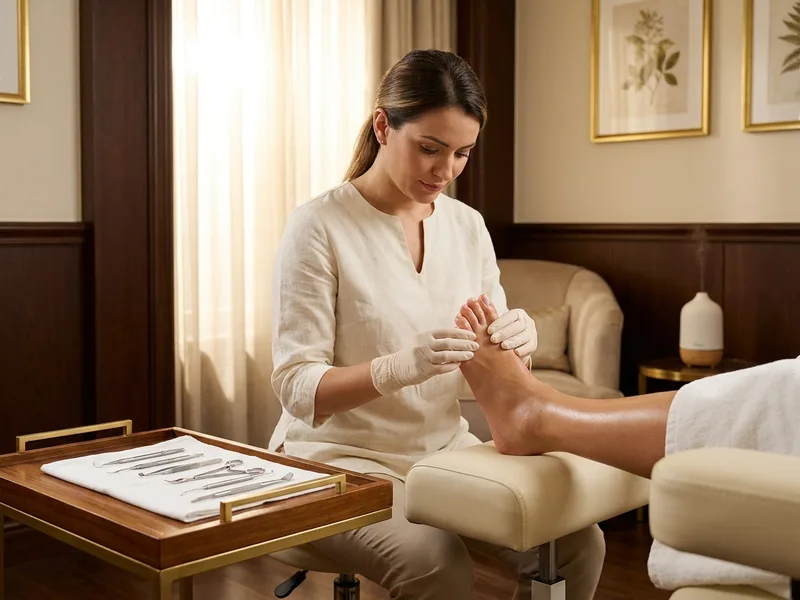
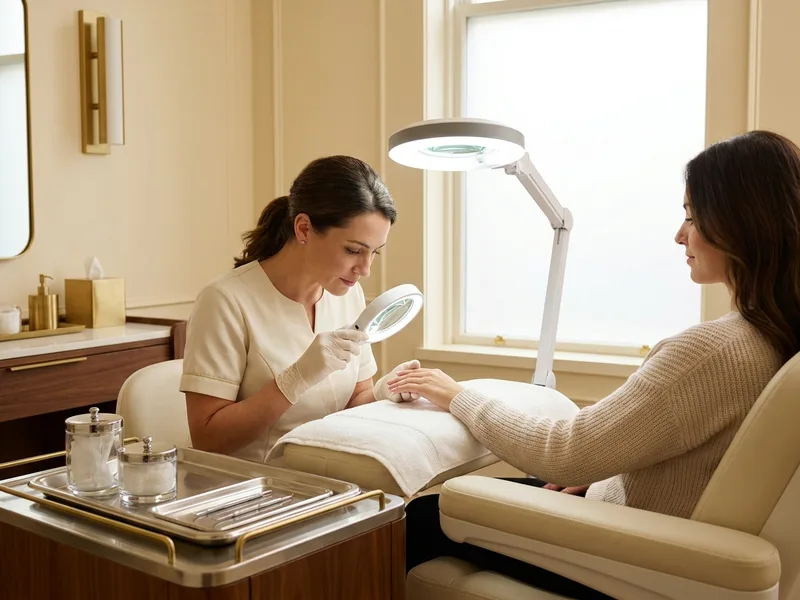
A pedicure at Capital Skin Medical Spa starts the same way any careful pedicure should: a look at your nails and skin before anything else happens. Tracy Rapant, our Certified Master Pedicurist, trims and shapes nails, exfoliates and files skin, applies moisturizer, and — on the Spa Pedicure specifically — follows with a full 20-minute lower leg and foot massage before finishing with Jessica Polish. What separates this from a standard nail salon visit isn’t the sequence of steps; it’s the training behind the person performing them, and the setting the service happens in. This is a spa/wellness service performed inside a physician-owned medspa — not a podiatry visit and not a dermatology treatment, and we’re explicit about that distinction because Capital Skin Medical Spa (Dr. John M. Purcell Jr., MD) shares a building with a separate dermatology practice run by a different physician.
The North American School of Podology Credential, Explained
Tracy Rapant is a Certified Master Pedicurist, certified in advanced pedicures and nail/skin pathology as well as diabetic foot syndrome by the North American School of Podology, with continued education at the North American School of Pedicuring. That certification covers named, specific competence areas: diabetic foot care, identifying nail and skin infections or diseases and building an appropriate care plan, safe sanitation and disinfection practices, biomechanical issues of the feet, advanced techniques in callus reduction, and homecare recommendations to extend results. We’re naming these individually rather than just citing “CMP” because the depth is the point — several other North American School of Podology-certified pedicurists work in the Capital District, including at Complexions Day Spa in Albany and Saratoga Springs, so the credential itself isn’t exclusive to Capital Skin. What we can say honestly is that we’ve named exactly what that training covers, and it’s applied inside a physician-owned medical setting rather than a standalone spa or salon.
Diabetic Foot Care Considerations — What This Does and Doesn’t Mean
Diabetes can affect circulation and nerve sensation in the feet, which is why foot care deserves extra caution for many people managing it. Tracy’s training includes diabetic foot care considerations as a named competence area, meaning she’s trained to approach a pedicure with appropriate caution for clients managing diabetes — being careful with tools, watching for skin changes, and knowing when something warrants a referral. This is not diabetic foot treatment, and Capital Skin Medical Spa does not diagnose, treat, or manage diabetes or any of its complications. If you have diabetes, particularly with any history of neuropathy, poor circulation, or slow-healing wounds, the responsible first step is a conversation with your physician or podiatrist about whether and how to proceed with pedicure services, and mentioning your diabetes at booking so Tracy can plan accordingly.
Recognizing, Not Diagnosing: Nail and Skin Pathology
Part of Tracy’s training covers identifying nail and skin infections or diseases and developing a care plan around what she observes. In practice, that means she’s more likely than an untrained technician to notice something like a nail fungus pattern, an unusual lesion, or a wound that isn’t healing normally — and to say something about it. It does not mean she diagnoses or treats those conditions. If something outside the normal scope of a spa pedicure comes up during your visit, the recommendation is to follow up with a physician, and because Capital Skin is a physician-owned practice, that referral pathway is real rather than theoretical.
Sanitation and Disinfection — The Detail Local Salons Skip
Safe sanitation and disinfection practices are a named part of Tracy’s North American School of Podology training, and we’ve made a deliberate choice to put this on the service page itself rather than link off to a separate policy document or say nothing at all — a review of several nearby nail salons and spas found that none of them address sanitation directly on their service pages, and even Complexions Day Spa, which shares Tracy’s certifying body, links to a separate off-page safety document rather than folding it into the service description. If sanitation and disinfection between clients is a real consideration for you before booking a pedicure — and for a lot of people, it should be — that’s a fair thing to ask about directly at booking.
Who Is a Good Candidate? (And Who Should Check With a Physician First)
Most people are good candidates for a manicure or pedicure at Capital Skin Medical Spa. A few situations are worth pausing on before you book, or at minimum mentioning when you call:
- An active skin or nail infection, open wound, or unhealed cut on the hands or feet — treat this first with your physician before a spa service
- Diabetes, especially with any history of neuropathy, poor circulation, or slow-healing wounds — check with your physician or podiatrist first, and mention it at booking
- A nail or skin condition you’re already being treated for by a dermatologist or podiatrist — ask your treating physician whether a spa pedicure is appropriate in the meantime
- Any condition your physician has specifically advised caution around with foot soaking, water exposure, or exfoliation, particularly relevant for the Aqua Detox Foot Spa
None of the above is a reason to assume you can’t book — it’s a reason to have a quick conversation first, either with your physician or with us at booking, so your visit is planned around your actual situation rather than a generic assumption.
What the Research Says About Diabetic Foot Care
Diabetes-related foot complications, including impaired wound healing and reduced sensation, are well documented by public health authorities, and routine foot inspection is a standard recommendation for people managing diabetes (cdc.gov — Your Feet and Diabetes). The clinical literature on diagnosis and management of diabetic foot complications, published through the National Center for Biotechnology Information’s Bookshelf, reinforces why routine inspection and prompt physician follow-up matter (ncbi.nlm.nih.gov — Diagnosis and Management of Diabetic Foot Complications). As always, individual risk varies with how long someone has had diabetes and whether complications like neuropathy are already present, which is exactly why a physician conversation — not a spa visit — is the right first step for anyone with concerns.