How Cryolipolysis Actually Reduces Fat
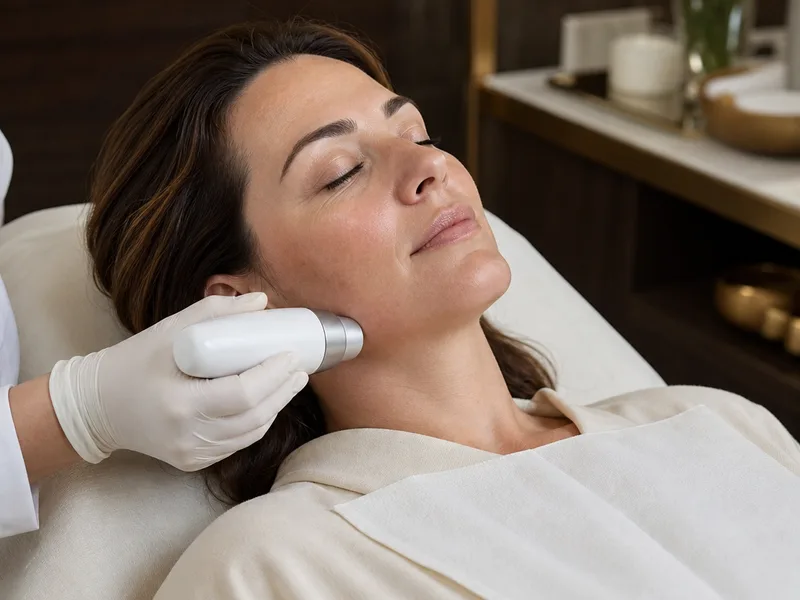
CoolSculpting works on a principle called cryolipolysis — the idea that fat cells are more sensitive to cold than the skin, muscle, and nerves around them. An applicator draws the treatment area into contact with a cooling plate and holds it at a temperature calibrated to target fat cells, which are more sensitive to cold than the skin, nerves, and muscle around them; that selectivity is what allows controlled cooling to affect fat preferentially, not a guarantee against injury, and skin and nerve effects are among the documented possible complications we discuss at consultation. That damage doesn’t remove the fat cells on the spot. Instead, it triggers a natural process called apoptosis — programmed cell death — in the affected fat cells, and your body’s own immune system gradually clears that cellular debris over the following weeks. Most patients start noticing a change around three to four weeks after treatment, with fuller results appearing over one to three months, and for some patients longer than that.
CoolSculpting vs. GLP-1 Weight-Loss Medication — and How They Work Together
Semaglutide, tirzepatide, and similar GLP-1 medications have changed how a lot of patients think about their weight, and it’s a fair question whether CoolSculpting still has a place alongside them. It does, but only because the two tools solve genuinely different problems. GLP-1 medications work systemically — they reduce appetite and drive overall, whole-body weight loss over time. CoolSculpting does not touch your overall weight at all; it is FDA-cleared specifically to reduce localized, pinchable subcutaneous fat in one treated area, and it has no effect on visceral fat or the deeper fat associated with obesity. That’s why CoolSculpting pairs well with medical weight management rather than replacing it. Where the two genuinely complement each other is sequencing. A patient who has lost substantial weight through a GLP-1 medication and reached a stable point often finds one or two areas — a lower-abdomen pocket, submental fullness — that simply didn’t respond the way the rest of the body did. That’s a legitimate reason to consider CoolSculpting as a finishing step, once your weight has stabilized, not while you’re still actively losing. The two work as sequential tools for two different jobs.
Who Is a Good Candidate?
The best CoolSculpting candidates are close to their goal weight already, with one or more specific pockets of fat that they can pinch between their fingers and that haven’t responded to diet or exercise. It’s a contouring tool built for targeted areas rather than overall weight loss.
Who Should NOT Have CoolSculpting
Certain patients are not good candidates for cryolipolysis for genuine medical reasons, not just marketing caution:
- Cryoglobulinemia — a condition in which blood proteins abnormally clump in cold temperatures
- Cold agglutinin disease — an autoimmune condition triggered by cold exposure
- Paroxysmal cold hemoglobinuria — a rare cold-triggered blood disorder
- Pregnancy
- A hernia at or near the intended treatment site
- Unrealistic expectations of dramatic, whole-body change from a localized treatment
If any of these apply to you, we’ll say so plainly at your consultation rather than proceeding anyway.
Risks and Side Effects, Including Paradoxical Adipose Hyperplasia
Most CoolSculpting patients experience only common, temporary side effects at the treatment site: redness, swelling, bruising, firmness, tingling, and numbness that typically fade within days to a couple of weeks. A less common but medically important risk is paradoxical adipose hyperplasia (PAH) — a rare complication in which the treated fat tissue enlarges rather than shrinks, usually becoming noticeable weeks to months after treatment as a firm, well-defined area. PAH is not known to be life-threatening, but it does not resolve on its own and is not corrected by additional cryolipolysis; correcting it typically requires a separate surgical procedure, such as liposuction, and that surgery may or may not fully resolve it. Reported incidence figures vary meaningfully by source. Manufacturer-cited rates have historically been very low, while more recent independent published research has reported notably higher rates than those manufacturer figures, and researchers themselves describe the true incidence as unsettled. We would rather tell you that the number is genuinely disputed than hand you a single confident percentage that oversimplifies it. What matters practically is that PAH is a real, disclosed possibility, and physician oversight at both your consultation and your post-treatment assessment is part of how we watch for it.
What to Expect
CoolSculpting is FDA-cleared for reducing fat in specific treated areas. Results vary by area, anatomy, and treatment plan, which is why Dr. Purcell builds your plan around your specific areas. Most patients tolerate treatment well, and temporary side effects at the treatment site are common and covered at your consultation.
What the Research Says
Cryolipolysis and its documented risk profile, including paradoxical adipose hyperplasia, are described in the National Library of Medicine’s StatPearls reference entry on cryolipolysis (ncbi.nlm.nih.gov/books/NBK560733). The American Academy of Dermatology maintains a patient-facing overview of non-surgical fat-reduction procedures, including candidacy considerations (aad.org/public/cosmetic/fat-removal). General regulatory information on cosmetic medical devices is available from the FDA (fda.gov/medical-devices/aesthetic-cosmetic-devices/non-invasive-body-contouring-technologies). As with any body-contouring procedure, individual results and risk depend on anatomy, treatment plan, and overall health, which is why every CoolSculpting plan at Capital Skin starts with an in-person consultation rather than a generic protocol.