Why a Concern-First Approach Beats a Device-First One
Most people searching for laser treatment don’t know the name of any laser platform — they know they’re bothered by brown spots, redness, fine lines, unwanted hair, or a tattoo they regret. A practice that leads with device names is asking you to already know something you came here to learn. Capital Skin Medical Spa built this hub the opposite way: start with your concern, and let the concern point to the platform. That only works if a practice genuinely owns enough distinct devices to cover the real range of concerns patients bring in — which is the structural advantage six laser treatments under one roof actually provides. If the first laser we discuss isn’t the right match for what you’re dealing with, we don’t send you elsewhere; we already have the next option in the building.
Physician-Directed, Not Just Physician-Owned
Every laser and light platform on this page is offered under the direction of Dr. John M. Purcell Jr., MD, Owner and Medical Director of Capital Skin Medical Spa. Dr. Purcell brings 20+ years of experience as a physician (MD) to how treatment plans are built here, and Capital Skin is a fourth-generation medical family with roots in the Capital District. That matters most at exactly the decision this page is about: which of six meaningfully different laser treatments is appropriate for your skin, your concern, and your goals — a judgment call, not a menu selection.
How We Actually Pick a Platform
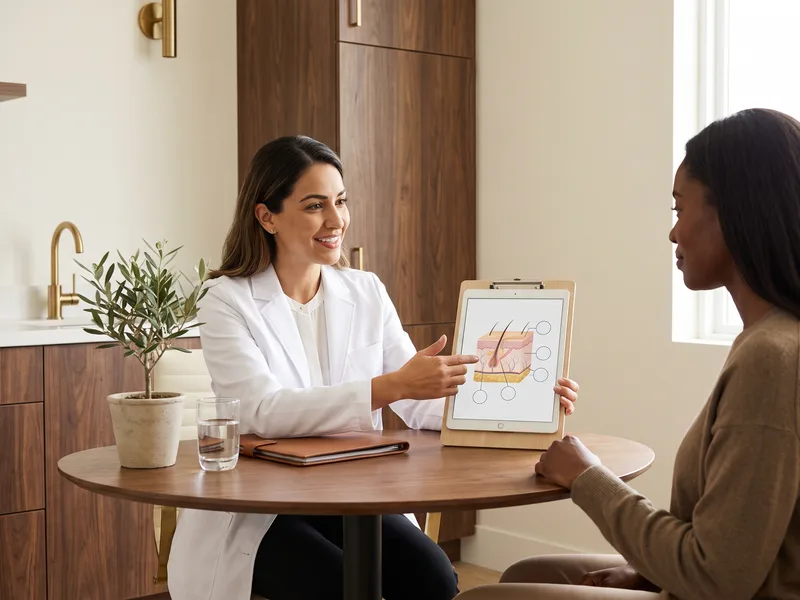
Rather than ask you to guess, Capital Skin offers a complimentary VISIA skin analysis — an imaging tool that captures an objective picture of sun damage, pore size, redness, and pigment across your skin. It gives Dr. Purcell’s recommendation something concrete to work from instead of a visual guess alone. Combined with a conversation about your goals, timeline, and any prior treatments, that’s how we land on a specific platform (or sequence of platforms) rather than defaulting to whichever device happens to be available that day.
Skin Tone and Laser Selection Are Connected
Not every laser wavelength interacts with every skin tone the same way. Some wavelengths carry a higher risk of pigmentary change — either lightening or darkening of treated skin — in deeper skin tones, which is a genuine, well-documented consideration in laser dermatology, not a marketing footnote. This is one of the real reasons platform selection isn’t automatic here: a device that’s an excellent match for one patient’s skin tone and concern may not be the right first choice for another’s, even with an identical complaint. Your consultation is where that assessment happens, before any device is recommended.
Who Is a Good Candidate for Laser Treatment?
Because we offer six laser treatments with genuinely different mechanisms, candidacy is evaluated per treatment rather than as one blanket answer — but several factors matter across nearly all of them and are worth raising before your consultation:
- Recent sun exposure or a tan on the treatment area, which raises the risk of skin injury or pigment change with several of our platforms
- An active skin infection, rash, or open wound at the treatment site
- Current or recent use of isotretinoin, which affects skin sensitivity and healing
- Use of other photosensitizing medications
- Pregnancy — elective laser treatments are generally deferred until after delivery
- A personal history of keloid scarring, which is relevant to any treatment that creates controlled tissue injury, particularly SmartSkin+ CO2
None of these automatically rule out treatment everywhere on this page — a factor that pauses one platform may not affect another — which is exactly why this is a consultation conversation and not a form you fill out alone.
Downtime Is Not the Same Across Platforms
It’s tempting to think of “laser treatment” as one experience with one recovery timeline. It isn’t. Laser Genesis is a mild, low-downtime treatment most patients can return to normal activity from immediately. SmartSkin+ CO2, by contrast, is an ablative treatment that creates real, visible healing over several days. excel® V and PICO Genesis fall between those two depending on settings and the concern being treated.
The Upstate NY Laser Season
Post-treatment skin is more sensitive to UV exposure while it heals, which is why many Capital District patients plan pigment-focused and resurfacing treatments for the lower-sun months, roughly October through March. It’s a scheduling preference many patients find useful, not a rule that summer treatment is unsafe — talk to us at consultation about timing that fits both your calendar and the platform involved.
What the Research Says
Laser-tissue interaction — the selective targeting of pigment, blood vessels, or water content that underlies devices like the ones on this page — is described in the National Library of Medicine’s StatPearls reference on laser hair removal and selective photothermolysis (ncbi.nlm.nih.gov/books/NBK507861), which remains a useful primer even for readers researching a different laser concern, since the underlying physics is shared across platforms. The FDA maintains general guidance on medical laser devices for patients and providers (fda.gov/radiation-emitting-products/surgical-and-therapeutic-products/medical-lasers), and the American Academy of Dermatology publishes consumer-facing guidance on laser and light treatments (aad.org/public/cosmetic/hair-removal). Individual response to any laser treatment depends on skin tone, the specific concern being treated, and the platform used, which is why every recommendation on this page starts with a consultation rather than a generic protocol.