How a Keratin Lash Lift and Brow Lamination Actually Work
Both treatments rely on the same underlying chemistry: reshaping the keratin protein structure inside your own hair. Hair keratin is held in its shape partly by disulfide bonds — chemical links between sulfur-containing amino acids (cysteine) within the keratin protein. A lift or lamination solution temporarily breaks a portion of those bonds, allowing the hair to be reshaped around a silicone shield (for lashes) or a shaping tool (for brows), and then a neutralizing step reforms the bonds in the new, lifted position. That’s the same general mechanism behind a classic hair perm, applied at a much gentler concentration appropriate for the delicate lash and brow area. Once the keratin structure resets, the new shape holds until enough untreated hair grows in to visually dilute it — which is why results fade gradually rather than reverting all at once.
Lift, Set, Nourish — the Three-Stage Process
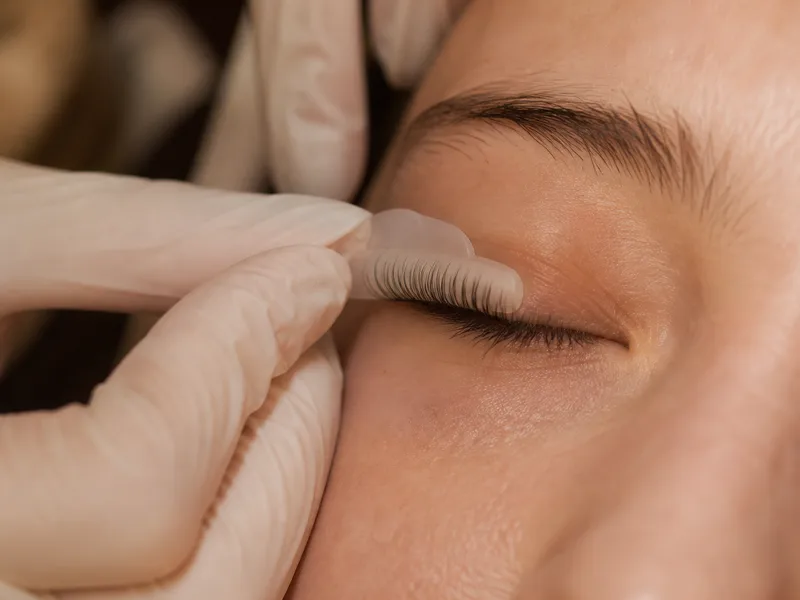
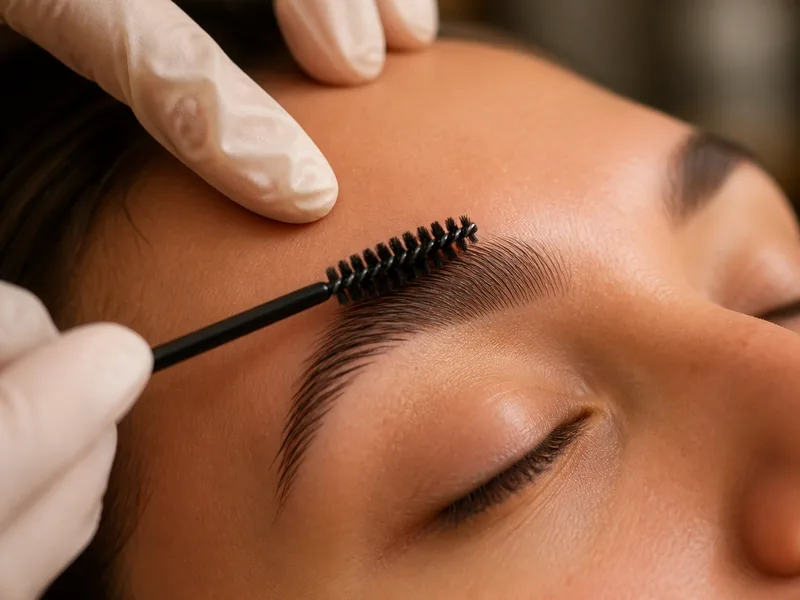
A typical YUMILashes® or Yumi® Brows appointment moves through three stages. First, the lift stage: a shield or shaping tool positions the hair in the desired curve or direction, and the first solution begins loosening the internal keratin bonds. Second, the set stage: a neutralizing solution locks the keratin structure back into its new shape around the shield. Third, a nourishing stage: a conditioning serum is applied to help counter the dryness that a chemical reshaping process can cause, since disrupting and reforming keratin bonds is, by nature, a stress on the hair shaft. Tinting, when added, is typically layered in during or just after the lift stage.
Lash Lift vs. Lash Extensions — A Real Comparison
These are two different services solving a similar problem in different ways, and searchers frequently confuse them. Extensions are individual synthetic lashes bonded with adhesive to each natural lash, building length and volume that isn’t naturally there; they require infill appointments roughly every 2-3 weeks as your natural lashes shed and grow, plus daily care to prevent tangling. A lift changes the shape and curl of the lashes you already have — no added length, no adhesive, no infill cycle — and grows out with your natural lash cycle over the 8-12 week window instead of needing biweekly maintenance. Clients who want a low-maintenance, wash-and-go look, or who are wary of long-term adhesive use near the eye, often prefer a lift; clients chasing more dramatic length or volume often choose extensions instead. Neither is objectively better — they’re different tools for different goals.
Who Is a Good Candidate?
Most people with healthy natural lashes and brows are reasonable candidates for a lift or lamination. Your esthetician screens for a specific set of situations that can change or delay the plan:
- Pregnancy or breastfeeding — treated as a precaution given the chemical solutions involved
- An active eye infection, such as conjunctivitis, or another active infection near the treatment area
- Recent eye surgery — the eye area needs to be fully healed before this treatment
- A known sensitivity or allergy to lash/brow lift solutions or their ingredients
- Very short, sparse, or already-damaged lashes, where a lift solution can add further stress to compromised hair
Most of these are simply timing questions your esthetician and, where relevant, Dr. Purcell Jr. can plan around.
What to Expect
A lash lift and brow lamination reshape your natural lashes and brows, and results depend on your own hair’s natural texture, growth cycle, and how it responds to the solution. That’s why your esthetician evaluates your lashes and brows in person before recommending a shield size or lamination approach.
What the Research Says
General consumer guidance on cosmetic products used near the eyes, including safety considerations for eyelash and eyebrow treatments, is published by the FDA at its cosmetics safety resource (fda.gov/cosmetics). As with any cosmetic chemical treatment, individual sensitivity varies, which is why a consultation and contraindication check happens before every appointment rather than relying on a generic protocol.