How Laser Hair Removal Actually Works
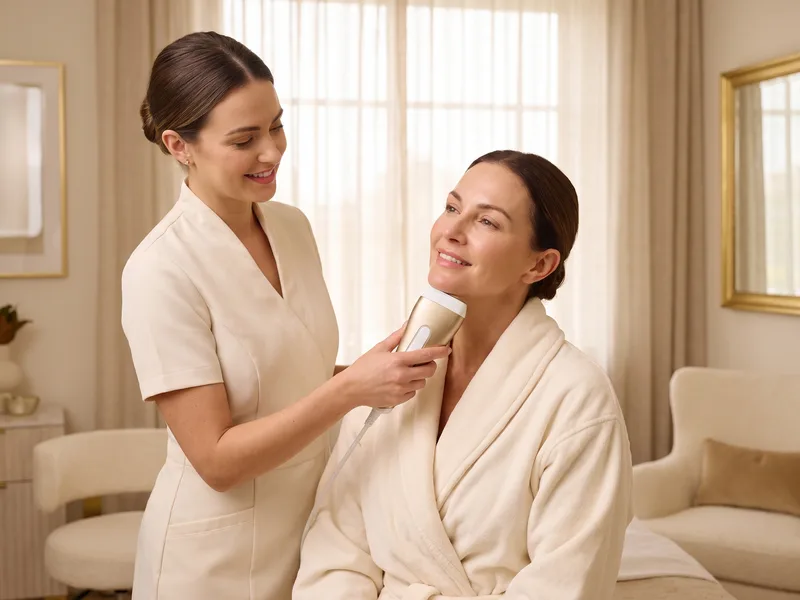
Laser hair removal at Capital Skin Medical Spa relies on a principle called selective photothermolysis — using a specific wavelength of light to target one structure in the skin while sparing everything around it. The LightSheer Desire diode laser emits energy tuned to be absorbed by melanin, the same pigment that gives hair its color. Because the hair follicle contains a concentrated pocket of melanin, the laser’s energy is drawn preferentially into that structure rather than into the surrounding skin. As the follicle absorbs the light, that energy converts to heat and conducts down into the follicular bulge and the dermal papilla — the two structures responsible for regenerating hair growth. Damage to those structures interrupts the follicle’s ability to produce a new hair, while the skin immediately around it stays largely unaffected because it never absorbed the same concentration of energy.
Why the Hair Growth Cycle Dictates Your Session Schedule
Every hair on your body moves through three phases: anagen, the active growth phase where the follicle is producing hair and carries the most melanin; catagen, a short transitional phase; and telogen, a resting phase where the follicle is dormant and holds comparatively little pigment. Laser hair removal is only effective on follicles in anagen, because that’s when there’s enough melanin present for the laser to find and heat. At any given moment, only a percentage of the hairs in a treatment area are in anagen — the rest are in catagen or telogen and are essentially invisible to the laser. This is precisely why one visit can never clear an entire area: it can only treat the follicles that happen to be actively growing that day. A second, third, and subsequent session catch a fresh set of follicles as they cycle into anagen, which is why a session series is a physiological necessity rather than an upsell. It’s also why session intervals differ by body area — facial hair cycles through anagen faster than hair on the legs or back, so facial treatments are often spaced closer together than body treatments to keep pace with the faster cycle.
Why Wavelength and Skin Tone Interact
Skin tone matters because melanin exists in both the hair follicle (the target) and the epidermis itself (which we want to protect). Different laser wavelengths penetrate to different depths and are absorbed differently by melanin in skin versus melanin in hair, which is why device selection and calibrated settings are not one-size-fits-all. A diode platform like LightSheer Desire is built to balance strong follicular energy delivery against epidermal safety, but the settings still need to be adjusted to each patient’s Fitzpatrick skin type — the six-point clinical scale used to classify how skin responds to UV and laser exposure — as well as their hair color and thickness. Epidermal cooling, delivered at the treatment tip, is part of how the system protects the skin surface while directing energy deeper to the follicle.
Who Is a Good Candidate?
Most people with hair that has visible pigment contrast against their skin are reasonable candidates for laser hair removal, but there are meaningful exceptions your consultation is designed to catch. You may not be a good candidate, or may need to delay treatment, if you have any of the following:
- Recent sun exposure or a tan on the treatment area, which increases the risk of skin injury during treatment
- Current or recent use of isotretinoin (commonly known by a past brand name for severe acne), which affects skin sensitivity
- Use of other photosensitizing medications that increase your skin’s reaction to light energy
- An active skin infection, rash, or open wound in the treatment area
- Pregnancy — most providers, including our team, defer elective laser treatments until after delivery
- Certain hormonal conditions, such as PCOS, that can drive ongoing new hair growth and may require a longer-term maintenance plan rather than a fixed session count
- Very light blonde, grey, or white hair, or hair with minimal pigment, which the laser has limited ability to target
Every consultation includes an honest conversation about how your specific hair color, skin tone, and any of the factors above are likely to affect your results — we would rather set accurate expectations up front than promise results we can’t back up.
What We Won’t Promise
We take FDA-cleared language seriously: laser hair removal is cleared for permanent hair reduction, not permanent hair removal. A completed series produces long-term, substantial reduction in regrowth, and many patients go years between the need for any touch-up. But hair follicles can occasionally reactivate, particularly in areas influenced by hormonal changes, so we describe outcomes honestly rather than promising a hair-free guarantee.
What the Research Says
Laser hair removal’s mechanism and use for hair reduction are described in the National Library of Medicine’s StatPearls reference entry on laser hair removal (ncbi.nlm.nih.gov/books/NBK507861), and the FDA maintains general guidance on medical laser devices for both patients and providers (fda.gov/radiation-emitting-products/surgical-and-therapeutic-products/medical-lasers). The American Academy of Dermatology’s patient resource on hair removal (aad.org/public/cosmetic/hair-removal) is a useful starting point for understanding candidacy and expectations. As with any laser treatment, individual response depends on hair color, skin tone, and hormonal factors, which is why every laser hair removal plan at Capital Skin starts with an in-person consultation rather than a generic protocol.